Cruise lines and cruise ferries were seriously affected by Covid-19 pandemic lockdowns and other restrictions, but some glints of a better future can already be seen on the horizon. Numbers of cruise
ship passengers are gradually showing signs of increasing. Even so, there’s still a long way to go.
At the end of April 2022, the annual
cruise line business conference Seatrade
Cruise Global (SCG) was arranged in
Miami, Florida. The participants discussed
the current state of business, as well as
future prospects and developmental ideas.
For obvious reasons, the emphasis
of the discussions was focused on the
Covid-19 pandemic. The Cruise Line Industrial
Association (CLIA) members gravely
enumerated the pandemic’s effects on the
cruise line industries but – on a more positive
note – also had some optimism for
business recovery in the foreseeable future.
In the two years of Covid-19 pandemic,
cruise lines suffered considerably
more from the restrictions and business disruptions
than other business sectors related
to tourism. According to CLIA, this was
largely due to massive amounts of infections
aboard cruise ships, and the resulting
negative publicity. Still, cruise lines did
their best to ensure the health and safety
of passengers.
In the recent months, cruise lines have
already started on the path to recovery, but
there have been some regional differences.
Europe and the U.S. have seen positive progress,
while cruise lines in China are still in
lockdown mode, due to China’s national
zero-tolerance policies. Considerable caution
can also be noted in other Asian and
Pacific areas.
Still, according to CLIA’s estimates,
cruise ships may operate on an average
passenger capacity of 92 percent already
in July 2022. Globally, shipyards now have
77 new cruise ships under construction.
A passenger-capacity increase of 4.7 million
can be expected by the year 2026.

BETTER NUMBERS
FOR TALLINK GROUP
Cruise industries have started to recover
from Covid-19 problems in Northern
Europe, too.
For instance, the cruise ferry company
Tallink Group that operates largely in the
Baltic Sea region announced in April an
increase in the number of cruise passengers
in the first quarter of 2022, compared to
the same period in the year 2021.
From January to March, the company
carried a total of 720,261 passengers. This
means an increase of 169.5 percent from
Q1/2021.
”Of course, the numbers of passengers
are still lower than in the pre-pandemic
era, but things are gradually beginning
to go in the right direction,” notes
Ms. Marika Nöjd, Communications Director
for Tallink Silja Oy.
”Some of our routes – e.g. between
Stockholm and Riga – have not yet been
opened after the pandemic, while some
others now have only reduced traffic. At
the moment, only one ship is operational
on the route between Stockholm and Tallinn.”
However, Tallink Silja’s routes from
Finland to Sweden and Estonia are being
operated normally.
”In April 2022, our routes between
Finland and Estonia carried 250,000 passengers,
while three years earlier – in April
2019 – the number was 390,000. We still
have some catching up to do, but the passenger
numbers are on a steady upward
curve,” explains Nöjd.
RAPID RECOVERIES
On cruise ferry routes between Finland and
Sweden, the passenger numbers yield even
more evidence of imminent recovery.
”For April 2022, passengers on these
routes totaled 175,000, whereas in April
2019 Tallink Silja’s cruise ships carried
240,000 passengers. Here, things are looking
up already,” Nöjd rejoices.
”Towards the summer, the cruise line
business will undoubtedly recover even
more rapidly. As we speak, passenger reservations
for the summer are being made
at a good pace. Besides, many passengers
typically will reserve the cruise at the last
moment.”
Many of Tallink Group’s cruise line
routes are relatively short in duration. Even
if another Covid-19 surge should appear
within the next months, it would not interrupt
the cruises as seriously as would be
the case for the operators of intercontinental
cruises.
”If passengers stay on board for a
two-night cruise, no long-term isolations
or quarantines would be necessary,” Nöjd
expects.
Also, more and more passengers now
have full vaccination coverage. This, too,
has reduced the need for new quarantines.
NEW CRUISE SHIP
FOR AUTUMN 2022
When the Covid-19 pandemic disrupted
the cruise business, Tallink Silja sold or
leased out some of the company’s cruise
ships, though not those utilised on the
most popular routes.
”However, Rauma Marine Constructions
RMC shipyard in Rauma, Finland, is
already making the finishing touches on
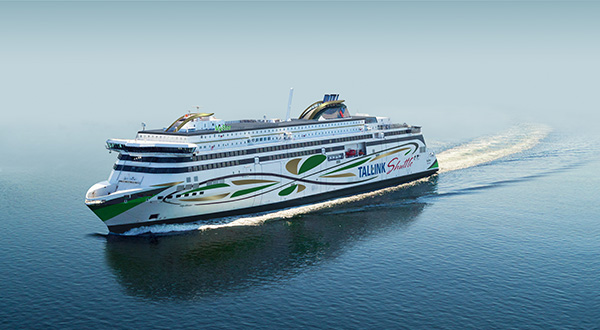
our new cruise ship, M/S MyStar. She will
be delivered in early autumn of 2022 and
will start operations on the Helsinki to Tallinn
route,” Nöjd recounts.
The new ship will operate along
Tallink’s current ship M/S Megastar that
started her cruises in early 2017.
”At the moment, we have no other
plans for ordering cruise ships, but this
new vessel will prepare us for the postpandemic
future. Come what may, we are
facing it with careful optimism,” asserts
Nöjd.
by Ari Monenen
pictures by Tallink Silja