New, more sustainable fuels are slowly changing the marine industry. Methanol, ammonia and hydrogen are among the fuels used to power the next-gen ships.
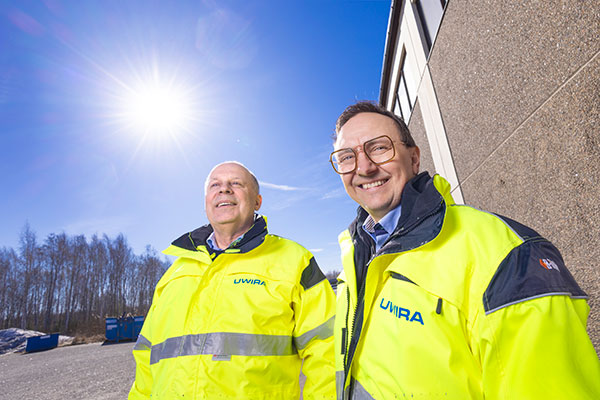
Uwira, an innovative Finnish pipeline manufacturer, delivers pipeline solutions to ships looking to deploy new fuels. Sales & Sustainability Director Samuli Kuusisto points out that Uwira has decades of experience in producing advanced pipeline solutions for high demand maritime markets.
“We continue the development of new concepts for sustainable fuels,” he says.
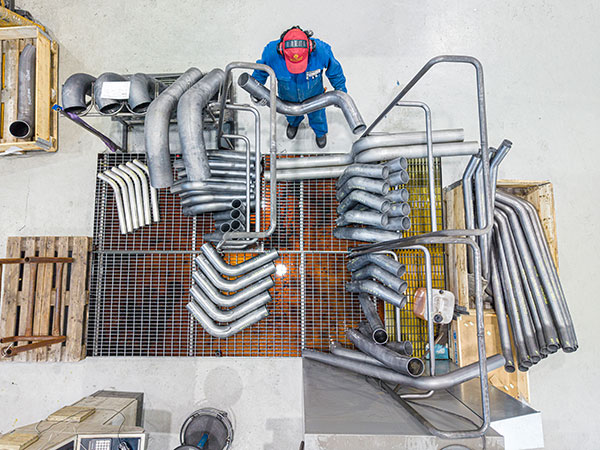
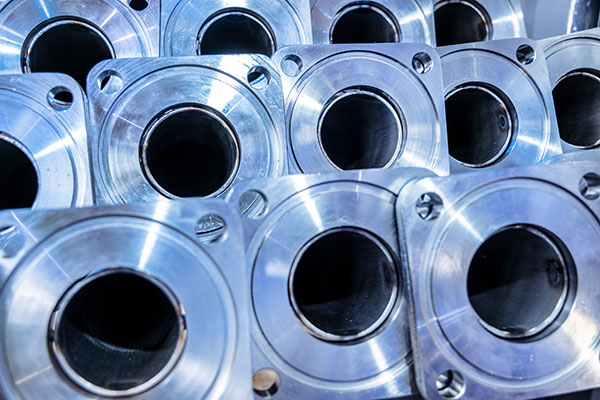
Uwira’s modular solutions use double-walled pipes that guarantee safe transfer of hazardous fuels, such as methanol. Methanol, however, requires high pressure to work:
“Our pipeline solution for medium speed engines is able to deal with high pressure and pressure fluctuations,” promises Kuusisto. “With the experience we have gathered so far, we can say that we can have design pressures of up to 1,800 bar, with materials that can handle a variety of different fuels.”
The company’s double-walled pipes are made of materials such as steel, stainless steel, Duplex, and Super-Duplex Stainless Steel.
Double-walls require rare know-how
Thomas Hägglund, Uwira’s Director of Development, says that building double-walled pipes onboard ships requires very specific expertise.
“Dealing with high vibrations and acoustic pressure waves due to long pipes is frequently a challenge on ships. We are able to find the technical solutions for every case,” he says.
According to Hägglund, two major themes keep surfacing in the discussions with potential customers:
“Finding a solution that can withstand the mechanical stress and handle the specific fuel is crucial, along with safety issues and feasibility.”
“We have expertise in design validation, pre-fabrication and onboard installation to make it work,” he adds.
Decade of excellence
This expertise, however, did not develop overnight. As early as 2011, Uwira was already delivering modular solutions made of double-walled pipes to ships. Now, with several vessels under her belt, Uwira moves confidently into the future.
“We don’t know yet, what will be the most popular new fuels, say, 15-20 years from now, but we have working concepts in place for every fuel out there,” Samuli Kuusisto says.
Thomas Hägglund agrees: when a new ship hits the waves, the engine should run for good 30-35 years. Not having the ability to use alternative fuels is already a handicap, and will become an even bigger one in the future.
“Ship owners obviously face challenges getting ready for the transition,” he says.
Going forward, Hägglund says that finding sustainable solutions is a major issue for the entire industry. “The market is currently looking for the winning fuels and we keep developing solutions that accommodate this transition.”
How about regulation?
Samuli Kuusisto points out that regulation is also moving fast to facilitate change – and stakeholders such as classification societies are coming up with solutions.
“We are confident that our solutions always meet the demands, now and in the future,” he says.
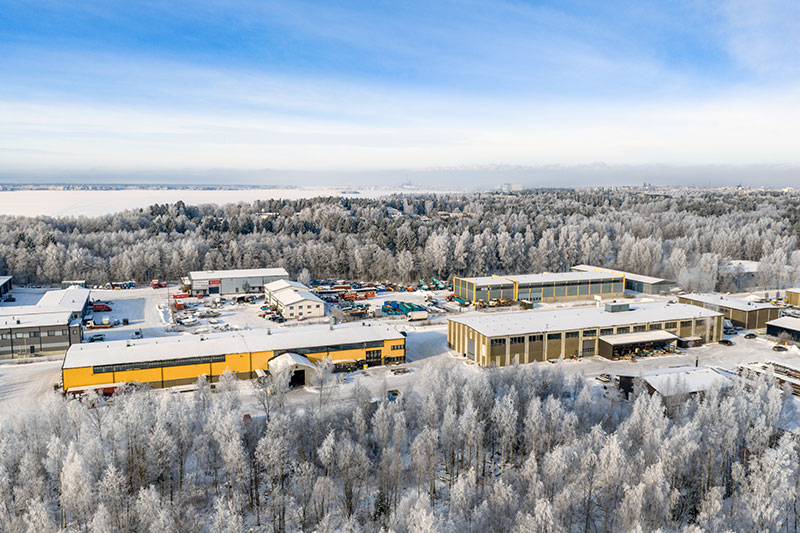
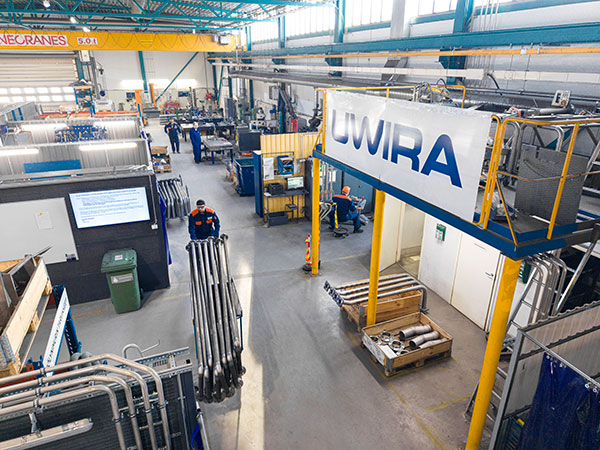
In order to keep pace with changing times, Uwira just performed a full factory layout renewal. The main objectives of the renewal are to shorten production lead times and improve employee well-being.A clear and functional layout also makes it easier to identify potential issues, enabling continued development of production in the future.
“We want to make our operations more efficient and cut down on emissions, too,” says Samuli Kuusisto.
Carbon footprint for every product!
What’s more, over the past four years, Uwira has systematically worked to improve the sustainability and responsibility of its operations. In practice, this has meant evaluating and developing processes across all business areas, including production, administration, and personnel.
One of Uwira’s top priorities has been to reach a stage where a carbon footprint calculation is provided for every delivery, right at the quotation stage. This goal was achieved last year, as the necessary data was integrated into Uwira’s ERP system.
“Carbon footprint calculations for every product is an important way to increase transparency and to better serve our customers who have their own climate and environmental targets to meet,” Kuusisto says.
More information: www.uwira.fi
by: SAMI J. ANTEROINEN