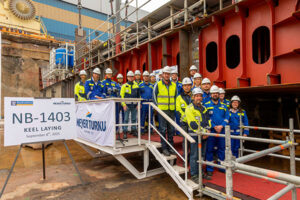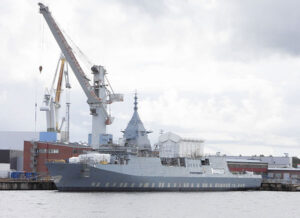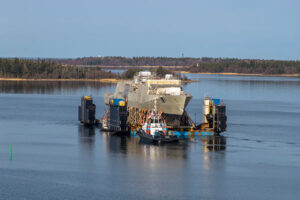
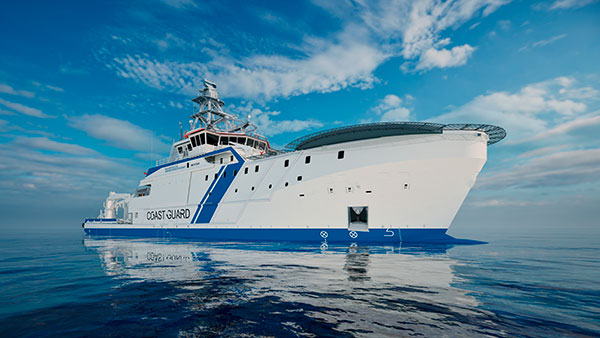
The construction of the Finnish Border Guard’s new patrol vessels, ordered from Meyer Turku, is progressing steadily. The keel-laying ceremony for the second vessel was celebrated on Tuesday, 30 September 2025.
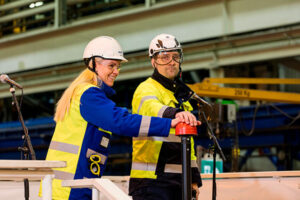
The ceremony took place at Baltic Operator’s shipyard in Gdansk. Representatives from the Finnish Border Guard, Meyer Turku Oy, Baltic Operator, and Bureau Veritas attended the event.
The keel-laying ceremony is a longstanding maritime tradition. Before laying the keel, representatives from the vessel’s client, the shipbuilder, and the classification society placed their own “lucky coins” under the first block on the keel supports. The coins are later installed in the completed ship to bring good fortune, as the tradition dictates. This custom dates back to the age of sailing ships, when a coin was placed under the main mast to ensure safe voyages.
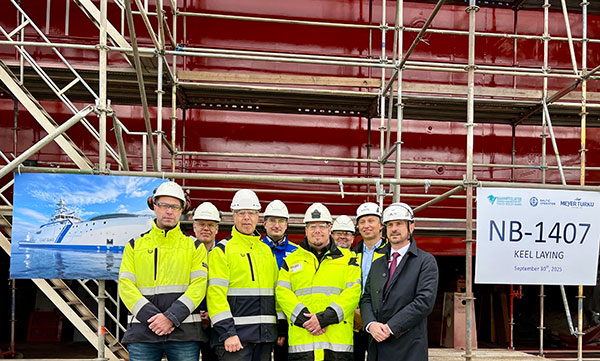
Photo: Meyer Turku
“Offshore patrol vessels are built at the facilities of our long-term partner shipyards, under Meyer Turku’s project management and according to our strict quality standards. Our joint and very timely project has now reached the stage where we can celebrate the keel-laying of the second vessel,” says Casimir Lindholm, CEO of Meyer Turku.
“The new offshore patrol vessels will, upon completion, significantly enhance Finland’s border and maritime security in a challenging and unpredictable security environment,” notes Major General Jari Tolppanen, Project Director at the Finnish Border Guard.
The vessels currently under construction will provide a significant performance improvement over the outgoing ships. Their monitoring and intervention capabilities in border control, as well as in safeguarding regional integrity, will be enhanced. Advanced surveillance systems and data transfer solutions will improve situational awareness and information sharing.
The new ships will also strengthen capabilities in major accident response and rescue operations. Readiness for managing serious environmental incidents will be immediate on all vessels, and the total oil recovery capacity will roughly double compared to current vessels. Additionally, the new ships will be low-emission and energy-efficient.
Translated by The Editorial Team.
Source: Meyer Turku