Smarter Ships and Suistanable Maritime Operations Safeguard Competetive Edge for the Future – but Quality Project Managemet Is Still King
The vision of the Finnish maritime industry is to make every ship smart by 2025. By applying digital technology, the marine cluster has vast opportunities to e.g. raise the level of safety in maritime operations and support sustainable transport at sea.
The marine prowess is, of course, is
linked to the digital development of
the surrounding society. Finland is already
a global forerunner in developing digital
solutions with world-leading capabilities in
artificial intelligence, sensoring and wireless
technology – and during the 2020’s,
the e-volution should only increase its
momentum.
The track record so far is pretty solid:
for example, in 2017, the Digital Economy
and Society Index ranked Finland as the
EU’s second most advanced digital economy.
The companies in the Finnish marine
cluster have both the experience and the
expertise to steer the global industry into
the future.
DELIVERING THE GOODS
Elina Andersson, Secretary General of the
Finnish Marine Industries, says that the
competitive edge of the Finnish maritime
has a lot to do with perfecting the processes:
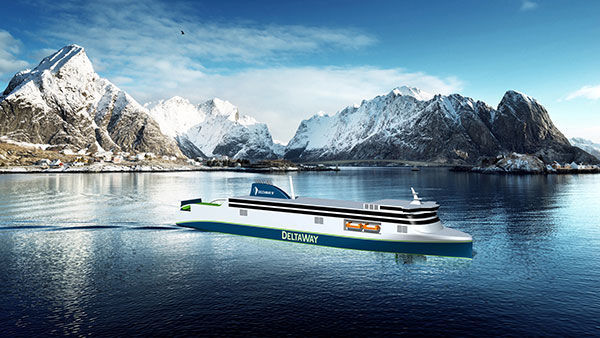
photo: DELTAMARIN LTD
“We have real project management
excellence in the industry. This means that
even big and demanding projects are able
to finish on time – which is something that
the customers have really come to depend
on and appreciate,” she says.
The other thing Andersson mentions
is the decades-long culture of working
together to achieve the best results.
“Collaboration in the marine industries
has always been of great importance,
and the role of broad cooperation has
only increased recently,” she believes. As
the Finnish marine cluster features around
1,000 companies – big and small, from all
around the country – this really is a remarkable
ecosystem with a dynamic mindset.
“From this ecosystem, we see that
new startups are emerging, bringing forward
innovations which benefit the entire
industry,” she adds.
DIGITAL DEPTH
Presently, competitiveness arises from
e.g. rapidly developing digital technologies
which are connecting people and
machines in novel ways, minimizing
human error and providing new revenue
and value-adding opportunities. Digitalization
leads to more efficient operations,
user friendliness and effective, streamlined
services.
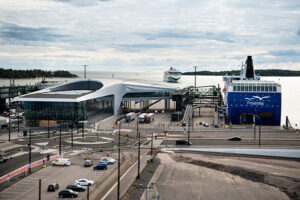
Naturally, part of this digital transition
is automation – in forms that may
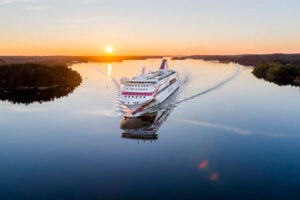
surprise you. For example, the world’s first
autonomous and remotely controlled ferry
journeyed from Turku, Finland, to a Finnish
archipelago destination in December
2018. Developed by Finnish companies,
the new technology aboard the ferry is
showing, in part, the way of the future
for autonomous vessels.
Autonomous shipping is attractive
from the point of view of the global players, since it tends to increase safety and
makes the shipping business more economically
viable. Digital connections allow
the ship to be steered from a land-based
control room, while a captain can take over
under demanding circumstances.

photo: VALMET
DECARBONIZING THE SEAS
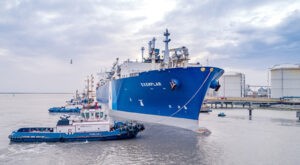
And then there is the sustainability angle.
Finnish companies have gained a global
reputation for creating smart, green innovations:
among these are advanced energy
management and fleet performance systems
which reduce emissions and increase
fuel savings.
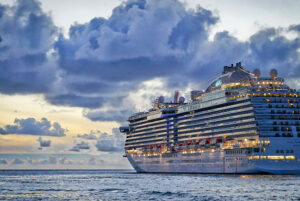
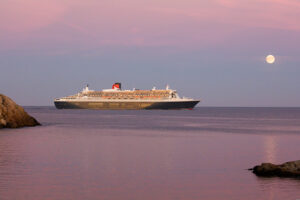
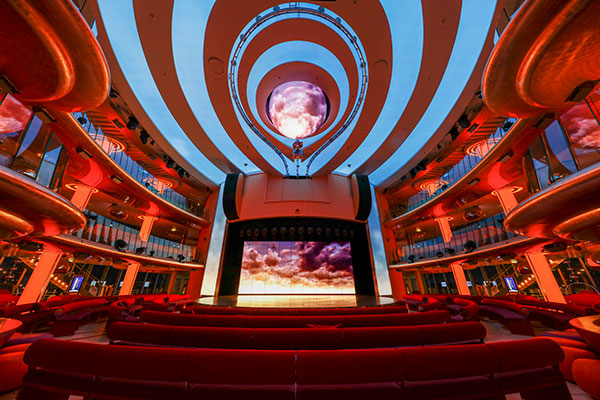
Luxury cruise ships, for example, benefit
from technology that allows them to
sail into waters with strict emission limits
or journey into fragile ecosystem areas.
It is no coincidence then that 60% of all
the world’s largest luxury cruise ships are
designed in Finland (and one third were
built by Finnish shipyards) – the cruise lines
are gravitating towards greener ships and
nobody has a better reputation in this
regard than the Finns.
BLUE GOES GREEN
The shipping industry will go increasingly
green, once the EU’s Green Deal policy
really gets going. In December 2019,
SEA Europe – the Shipyards’ and Maritime
Equipment Association of Europe –
welcomed Green Deal as a very ambitious
political engagement in support of a climate
neutral society by 2050.
SEA Europe noted that the Green
Deal for Europe offers “interesting challenges
and great opportunities” for
Europe’s shipyards and maritime equipment
industry. In addition, it will allow
the sector to enhance its global competitiveness,
whilst contributing in fulfilling
the Commission’s targets and in building a
sustainable “blue economy” for Europe.
By: Sami J. Anteroinen