Meyer Turku And RMC team up with Aalto University in a quest for future innovation
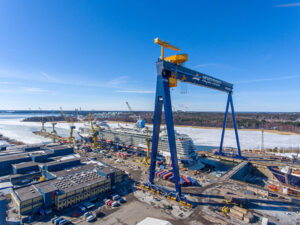
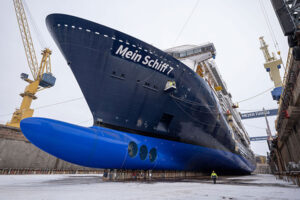
Future maritime expertise goes hand in hand with quality research and education. Finnish shipyards seek collaboration with universities in order to boost innovations and profitability via academic means. Another key concern is making sure that the maritime sector will continue to benefit from academically trained experts. Aalto University recently announced two significant collaborations with the shipyards of Turku and Rauma.
In December 2019, Aalto University and
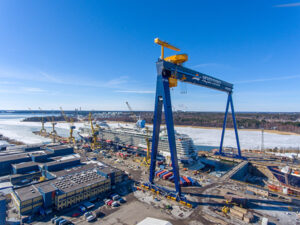
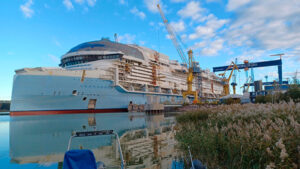
Meyer Turku Oy signed an agreement
that will strengthen and develop multidisciplinary
research and education collaboration
as well as give a boost to expert
co-operation. In connection to the agreement,
Meyer Turku CEO Jan Meyer commented
that the shipyard is constantly
looking to attract new talent and therefore
there is a need to be present at Aalto
campus and in the academic lives of the
students.
According to Ilkka Niemelä, President
of Aalto University, the agreement
forms another link in “a long chain” of
co-operation between the Turku shipyard
and the university, which brings together
cutting-edge research, high-quality education
and stakeholders from the marine
technology sector.
NEXT LEVEL
What does the collaboration mean in practice,
then? – The key idea is to increase multidisciplinary student projects, master’s
and doctoral thesis projects as well
as joint seminars and workshops. Meyer
Turku’s career paths and marine technology
employment opportunities will also
be made visible at the Otaniemi campus,
explains professor Pentti Kujala from Aalto
University.

Professor Pentti Kujala
photo: AALTO UNIVERSITY
“Research collaboration will continue
and expand in several areas, including
materials research and steel structures,
information and communications
technology and digitalization, hydrodynamics,
ship safety, energy efficiency and
solutions that support sustainable development,”
Kujala lists.
In addition, Aalto University’s brand
new MarineX project will be developed
into a new research forum and collaboration
platform for the maritime industry
and marine technology. This will serve to
strengthen the university’s leading position
in marine technology research, Kujala
believes.
“With MarineX, we are trying to figure
out what that unknown factor – or X –
could be that will be the future differencemaker
for the marine sector,” he explains
the ideology of the project. With strong
trends such as sustainability and digitalization
shaping also the fortunes of marine,
it is vital to keep searching for the “next
big thing”.

photo: UNSPLASH
“When we talk about experiences
that cruise ships provide in the future, for
instance, it makes sense to tap into the
imaginations of the younger generations.
Our students can certainly help in discovering
totally new perspectives.”
BUILDING ON TRADITION
In February 2020, Aalto University concluded
a new collaboration agreement
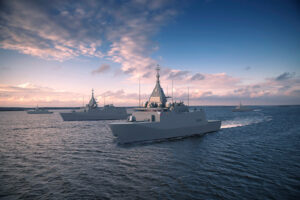
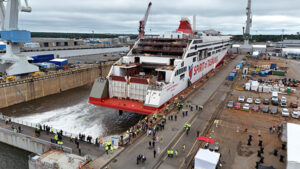
with Rauma Marine Constructions Oy
(RMC). The two partners will start planning
a long-term joint program on research and
development this year. The program will
focus particularly on developing technologies
that can improve the environmental
and safety aspects of maritime transport,
resulting in reduced carbon footprints, utilization
of new fuels and further developments
in vessel safety.
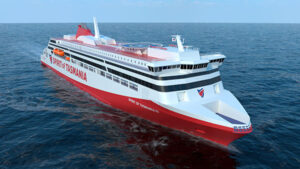
Jyrki Heinimaa, President and CEO of
RMC, says that the Rauma shipyard wishes
to remain at the “forefront of new development”
with regard to the construction
of passenger car ferries, multipurpose icebreakers
and government ships. “The environment
and safety are absolutely important
to us,” says Heinimaa.

photo: UNSPLASH
Professor Pentti Kujala comments
that this agreement will continue the
close collaboration between the Rauma
shipyard and the Otaniemi scientific
community that began roughly 40 years
ago.
“The confidence we have built over
the years in our joint development work
can be put to good use, as we seek solutions
to problems related to ship safety
and the environmental impact of ships,”
says Kujala.
NORTH REMEMBERS
Aalto University has always placed major
emphasis on marine technology and
research, investigating, for example, the
responses and strength of ships in a complex
physical environment where ice and
wave induced loads are present. The Aalto
research teams also look deep into systemlevel
issues at the scale of shipping systems
and fleets as well as individual ships and
their subsystems. The focus is – in addition
to passenger ships – on ice-going ships
and, more and more, impacts of autonomy
into shipping.
photo: INTERNATIONAL MARITIME ORGANIZATION
Around the world, marine tech solutions
are developed in various universities,
but Aalto adds a powerful “Northern
Dimension” to the mix, studying the
behavior of ships and structures in ice. Arctic
marine research focuses on ice loads on
ships and structures, on ship performance
and on ship safety, explains Kujala.
“We can conduct extensive full-scale
trials onboard ice-going ships and we can
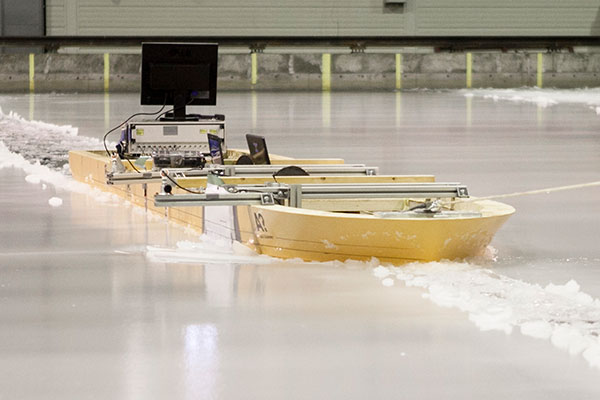
also utilize the Aalto Ice Tank which underwent
a 8 million euro upgrade last year,”
he says, adding that the need for ice-going
vessels has not diminished due to climate
change.
“As there is less ice, activity in the
Arctic seas can increase.”
By: Sami J. Anteroinen