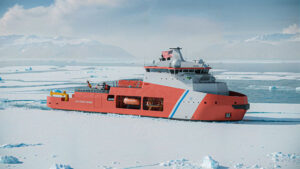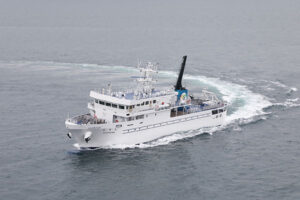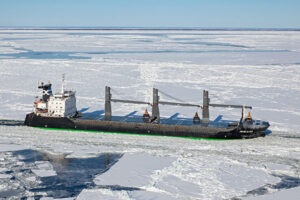
As Arctic sea ice thins due to climate change, new shipping routes are opening, creating growing interest from companies and governments. Aalto University is part of the ICE-SHIELD international research consortium, advancing the study and design of vessels capable of operating in icy conditions.
Icebreakers and Arctic Innovation
The consortium, which includes universities and research institutions from Finland, the U.S., and Canada, aims to accelerate Arctic ship development and strengthen next-generation marine and offshore technology.
Finland plays a key role thanks to its world-class Arctic maritime engineering research.
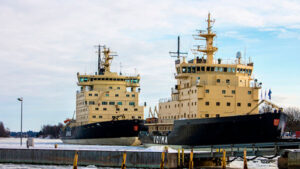
“Icebreakers guide commercial and military ships through icy waters, open frozen ports, and rescue vessels trapped in thick ice,” says Aalto University Associate Professor Mikko Suominen.
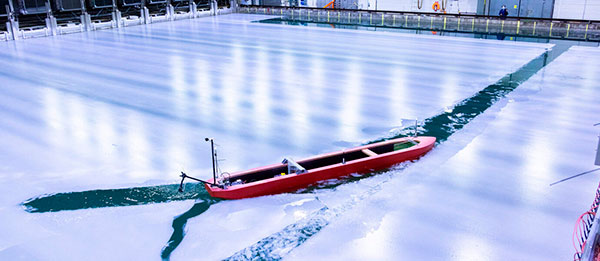
“Most commercial vessels are optimized for open water and have not been fully tested in ice. Studying them helps design new hulls and identify efficient Arctic routes.”
Finland is a global leader in icebreaker design, with eight icebreakers and around 80% of the world’s icebreakers designed by Finnish engineers. The U.S. and Canada are expanding their fleets, while Russia operates the world’s largest icebreaker fleet. ICE-SHIELD works to help partner countries enhance their icebreaking capabilities, develop autonomous ships, AI tools, and innovative hull forms, benefiting all vessels navigating Arctic waters.
Suominen stresses that advancing these innovations requires funding and collaboration. “Finland’s shipbuilding expertise offers a unique chance to turn research into practical solutions, benefiting both science and industry,” he says.
Condensed and translated by the editorial team.
Source: Aalto University