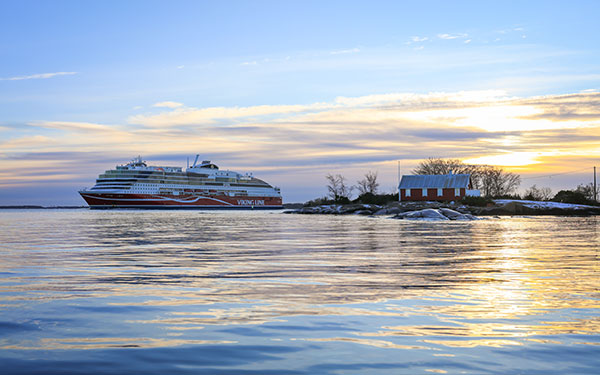
Viking Line is starting 2026 by continuing to offer travel and transport services with a high share of renewable European biogas. Last year the use of biofuel increased tenfold, and the Åland-based shipping company has now secured the same ambitious level for the coming year.
Biogas is used together with liquefied natural gas on the company’s newest vessels, Viking Glory and Viking Grace, which operate daily between Turku and Stockholm. This combination ensures very low sulphur and particulate emissions as well as a significantly smaller climate impact.
“Last year, greenhouse gas emissions from Glory and Grace were reduced by nearly 50,000 tonnes. For the first half of 2026, we have secured that 50 percent of the fuel will be biogas, and our goal is to maintain a high level throughout the year,” says Dani Lindberg, Sustainability Manager at Viking Line.
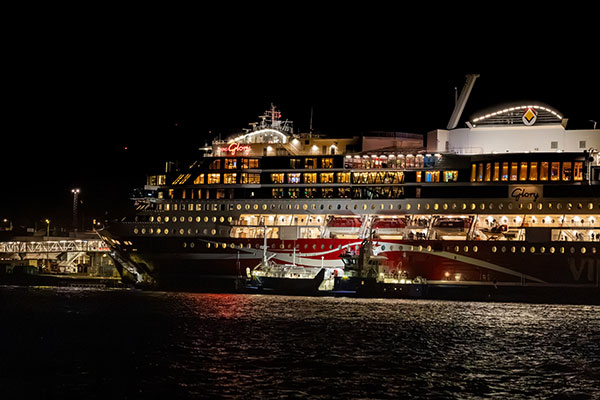
By choosing Viking Line’s vessels on the Turku route, both passengers and freight customers contribute to reducing emissions in the Baltic Sea. Since 2024, Viking Line has been developing a green shipping corridor between Turku and Stockholm together with the Ports of Stockholm and the Port of Turku. The goal is for the corridor to be completely fossil-free by 2035.
“There is no shortage of initiatives worldwide to create fossil-free shipping routes, but most of them are still in the planning stage. Our investment in biogas and energy-efficient vessels is one of the clearest and most comprehensive examples of how maritime transport can truly change,” says Marcus Risberg, CEO of Viking Line.
Translated by Editorial Team.