Finnish Marine Technology

Greener Ferry for Tallink

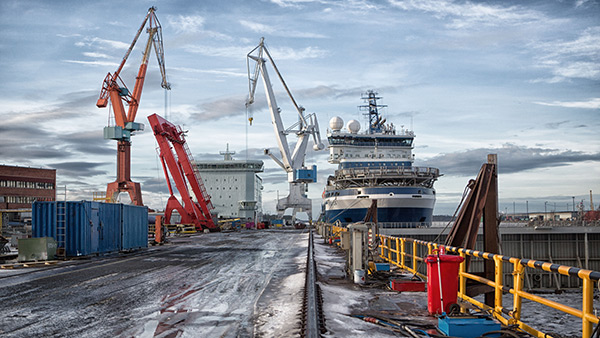
In October 2018, Rauma Marine Constructions and Tallink signed a letter of intent to build an environmentally friendly car and passenger ferry for the scheduled service between Tallinn and Helsinki. The ship, with a value of approximately 250 million euros, will be built at Rauma shipyard. RMC now looks strengthen its organisation and recruit more talent.

The planning of the Tallink Shuttle ship, which will operate on the Helsinki- Tallinn route, will start in spring 2019 and building will commence in 2020. The vessel will be delivered to Tallink at the end of 2021.

The new vessel is the biggest newbuild order as of yet for RMC. The passenger capacity of the ship will be 2,800 people. According to the company, the newest technology and innovative solutions will be utilised in the design phase to ensure that the vessel will be as energy-efficient and environmentally friendly as possible.

Jyrki Heinimaa, CEO, Rauma Marine Constructions, says that the recruitment of more employees is already underway.

“This is outstanding news for shipbuilding in Rauma. RMC’s four-year journey has been consistent and the letter of intent with Tallink represents a natural continuation of our development,” he says, estimating the order’s impact on employment to total around 1,500 person-years.

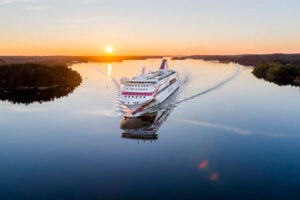
Over the years, Rauma shipyard has built a total of four vessels for Tallink Grupp. In addition, two more vessels have been designed at the shipyard. Baltic Queen, the previous vessel built at Rauma shipyard, was completed in 2009 and operates nowadays on the Tallinn-Stockholm route.

According to Heinimaa, Tallink has always shown appreciation for the shipbuilding expertise in Rauma. “This is an opportunity for us to utilise our longstanding experience and to help steer the ship traffic between Finland and Estonia in a more environmentally friendly direction,” says Heinimaa.

Tallink Grupp and RMC are now working on finalising the contract and financial arrangements.

By: Sami J. Anteroinen
Share this article: 

Environment

Decarbonization in Shipping Moves from Plans to Implementation

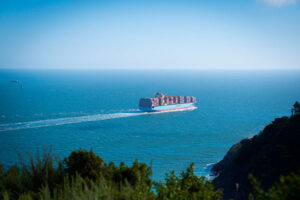
International shipping is entering a phase where reducing greenhouse gas emissions is no longer a long-term ambition, but a concrete part of everyday business operations. Regulatory pressure is increasing, technologies are advancing, and investment decisions are being made in an environment marked by uncertainty, where the distribution of costs has also become a central issue.

Meyer Turku’s New MERiON Program Guides the Maritime Industry Amid Upheavals

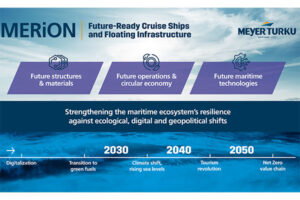
Meyer Turku is launching a five-year MERiON lead program, co-funded by Business Finland, which focuses on strengthening the shipbuilding industry through ecological, digital and geopolitical changes. The program brings together the existing maritime network as well as new business sectors to develop solutions for cruise ships and floating infrastructure.

Fuel Transition Reshapes the Maritime Industry

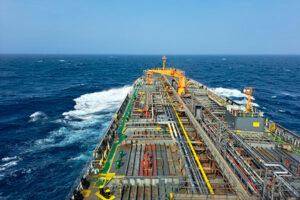
The maritime sector is undergoing its most significant energy transition to date. While multiple low-carbon fuel pathways are emerging, no clear winner has yet been established. Methanol, ammonia, LNG, biofuels, and synthetic fuels are all competing for position as the industry responds to tightening regulation and long-term decarbonization targets.

Editorial: Green Transition and Technology Define the Future of Finnish Maritime Industry

The maritime industry is entering a decade of profound transformation. Climate targets, geopolitical shifts, digitalization, and rapid technological development are reshaping the way ships are designed, built, and operated. For Finland, these changes are not merely challenges to overcome—they are opportunities to strengthen our position as a global leader in maritime innovation.

Decarbonization in Shipping Moves from Plans to Implementation

International shipping is entering a phase where reducing greenhouse gas emissions is no longer a long-term ambition, but a concrete part of everyday business operations. Regulatory pressure is increasing, technologies are advancing, and investment decisions are being made in an environment marked by uncertainty, where the distribution of costs has also become a central issue.

Meyer Turku’s New MERiON Program Guides the Maritime Industry Amid Upheavals

Meyer Turku is launching a five-year MERiON lead program, co-funded by Business Finland, which focuses on strengthening the shipbuilding industry through ecological, digital and geopolitical changes. The program brings together the existing maritime network as well as new business sectors to develop solutions for cruise ships and floating infrastructure.

Fuel Transition Reshapes the Maritime Industry

The maritime sector is undergoing its most significant energy transition to date. While multiple low-carbon fuel pathways are emerging, no clear winner has yet been established. Methanol, ammonia, LNG, biofuels, and synthetic fuels are all competing for position as the industry responds to tightening regulation and long-term decarbonization targets.

Editorial: Green Transition and Technology Define the Future of Finnish Maritime Industry

The maritime industry is entering a decade of profound transformation. Climate targets, geopolitical shifts, digitalization, and rapid technological development are reshaping the way ships are designed, built, and operated. For Finland, these changes are not merely challenges to overcome—they are opportunities to strengthen our position as a global leader in maritime innovation.