From adopting alternative fuels to optimising vessel design, the shipping industry is becoming increasingly aware of the need to operate more sustainably.
Although shipping is the most carbon-efficient mode of freight transport on a per tonne-kilometre basis, the sheer size of global trade results in a significant environmental impact. To achieve meaningful emissions reductions – the sector is currently responsible for approximately 3% of global annual CO2 emissions – coordinated action is required across the value chain. Shipbuilders, engine manufacturers, fuel producers, port authorities, and shipping companies must work collaboratively to accelerate innovation and reduce emissions.
Harnessing the sun at sea
Despite being a hard-to-abate industry, shipping is witnessing an acceleration in the adoption of clean technologies. Solar is emerging as an attractive option due to its abundance, reliability and zero-emission profile. While initially considered difficult to adapt to marine environments, continuous advancements in materials science and engineering are yielding more robust, efficient and cost-effective solar technologies. Breakthroughs in photovoltaics have led to lightweight, flexible, and corrosion-resistant solar panels, improving the feasibility of integrating solar arrays on commercial and passenger vessels. Improvements in storage and energy management technologies further reduce dependency on fossil fuels.

Onboard energy generation and storage
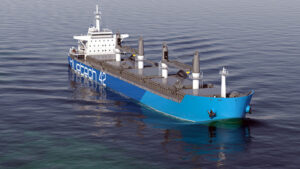
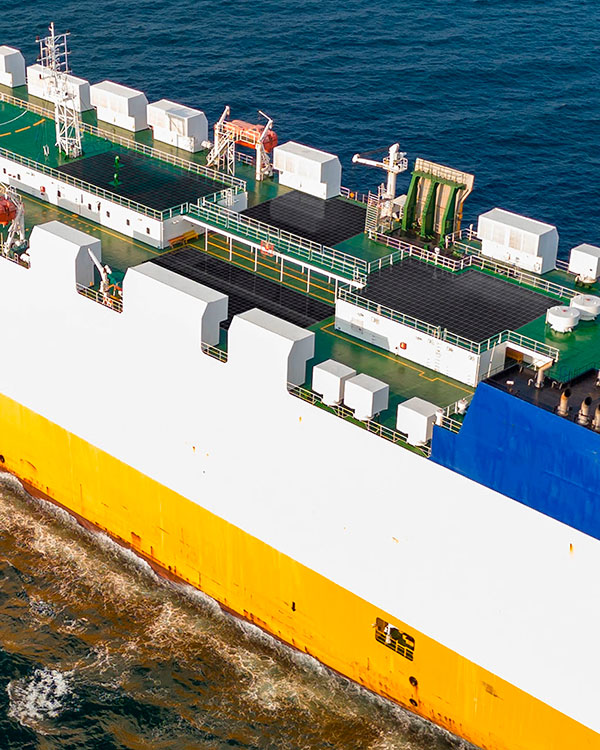
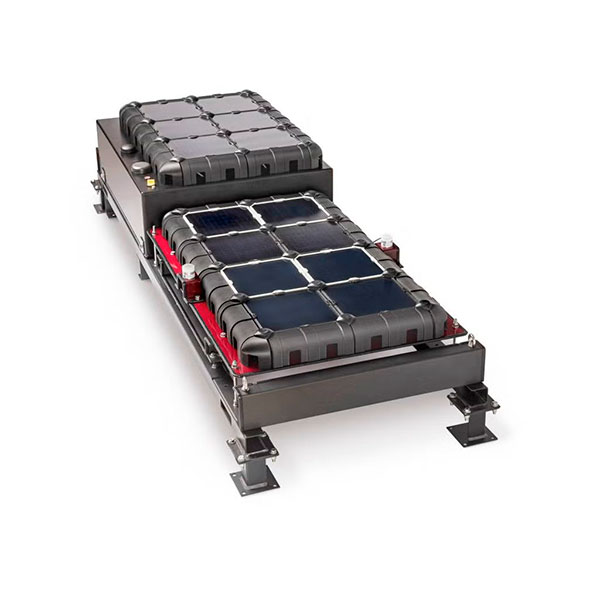
Grafmarine has developed a novel approach to clean energy generation and storage designed specifically for the operational and environmental demands of shipping. Its NanoDeck system is an adaptable, modular solar energy platform engineered to operate in the most challenging marine conditions. Composed of interlinked tiles made from advanced silicon- and perovskite-based Photovoltaic materials, the system converts flat surfaces, such as vessel decks, port structures, or offshore platforms, into intelligent energy hubs. Each tile combines solar power generation with hybrid storage technologies and can be retrofitted to existing fleets or integrated into new builds. Digital testing suggests it could save up to 10% of fuel on an oil tanker – equivalent to 10 tonnes of heavy fuel oil per day – with potential to increase to 40% over five years.
Green port infrastructure and AI support
Emissions during port operations remain a substantial contributor to greenhouse gases. The solid-state, plug-and-play architecture of systems such as NanoDeck allows for installation across diverse environments, including buildings, dock structures and dedicated energy zones, to generate clean, decentralised power. Grafmarine’s AI-driven platform, NanoPredict, optimises vessel energy use at sea by forecasting environmental conditions and dynamically adjusting power deployment. With nearly 100,000 ships generating 940 million tonnes of greenhouse gas emissions annually, solar technologies represent a promising step toward climate goals while enhancing operational resilience.
Condensed by the editorial team
Photos: Grafmarine
Source: Ship-technology.com