Shipping is currently in the midst of a structural transformation driven by climate policy, technology development, and investment pressure. The International Maritime Organization (IMO) has set increasingly ambitious emissions reduction targets, while the European Union’s regulatory framework is further accelerating the shift toward low- and zero-carbon fuels.
Unlike previous technological transitions in shipping, the current phase is characterized by uncertainty over which fuel pathways will ultimately dominate. Instead, multiple parallel solutions are being developed and deployed at the same time, each with distinct advantages, limitations, and readiness levels.
The key question is no longer whether alternative fuels are needed, but rather which technologies are worth investing in under conditions of long-term uncertainty.
“Shipping is currently in
the midst of a structural
transformation.
Methanol emerges as a practical contender
In recent years, methanol has strengthened its position as one of the most commercially viable alternative marine fuels, particularly in the deep-sea container segment. Several major shipping companies have already ordered methanol-capable or methanol-ready vessels, signaling growing confidence in its near-term scalability.
One of methanol’s key advantages is its relative simplicity in handling and integration. As a liquid fuel at ambient conditions, it avoids many of the storage and cryogenic challenges associated with fuels such as hydrogen or LNG. This makes it easier to adapt both onboard systems and port infrastructure compared to cryogenic or high-pressure alternatives.
However, this perceived simplicity should be interpreted with caution. Methanol is both toxic and highly flammable, which introduces significant safety requirements for storage, bunkering, and onboard handling. These characteristics demand robust safety systems, specialized training, and strict operational procedures, making its practical implementation more complex than its physical properties alone might suggest.
At the same time, the scalability of green methanol remains a central challenge. Climate benefits depend entirely on production pathways based on renewable electricity or sustainable carbon sources. At present, global production capacity is still limited, which continues to drive high costs and constrain widespread adoption.
Despite these limitations, methanol is increasingly viewed as one of the most realistic near-term solutions for newbuild investments.
Ammonia positioned as a long-term zero-carbon option
Ammonia is widely regarded as one of the most promising long-term zero-carbon marine fuels, particularly for deep-sea shipping segments where energy density requirements are high and direct electrification is not feasible.
Because ammonia contains no carbon, its use does not produce direct CO₂ emissions during combustion. This makes it an attractive option in long-term decarbonization scenarios, especially if produced using renewable energy. However, ammonia combustion can result in the formation of nitrogen oxides (NOₓ), which are harmful atmospheric pollutants and may also contribute indirectly to greenhouse gas effects depending on atmospheric chemistry and lifecycle conditions. This means that while ammonia eliminates carbon emissions at the point of use, it does not automatically eliminate all climate and environmental impacts.
Significant progress is being made in engine development and fuel system design, and early-stage demonstrations and pilot projects are underway across the industry. However, the technology is still in a relatively early phase of commercialization.
The most critical barrier remains safety. Ammonia is toxic and requires stringent handling procedures, specialized training, and robust safety systems both onboard vessels and in port infrastructure. These requirements make its large-scale adoption more complex compared to other fuel options.
As a result, ammonia is often seen as a longer-term solution rather than an immediate replacement for conventional fuels.
“Regulatory pressure is the
most significant driver shaping
fuel choices in the maritime sector.
LNG maintains its role as a transition fuel
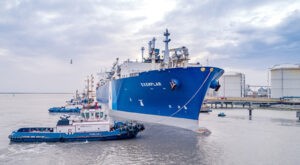
Liquefied natural gas (LNG) is not a new entrant in the alternative fuel landscape. Over the past decade, it has become a widely adopted option, particularly in cruise and container shipping segments.
Its main advantage lies in its maturity. LNG infrastructure is already well developed in many regions, engine technology is proven, and operational experience is extensive. This makes it an attractive transitional option for shipowners seeking immediate emissions reductions compared to conventional heavy fuel oil.
However, the long-term role of LNG is increasingly debated. While it reduces several local air pollutants, its overall climate benefit is influenced by upstream methane emissions, often referred to as methane slip, which can significantly affect lifecycle emissions performance.
As regulatory frameworks tighten, LNG is therefore increasingly viewed as a bridging solution rather than a final decarbonization pathway.
Biofuels offer immediate emission reductions
While much of the industry attention is focused on next-generation fuels, biofuels currently represent one of the most practical short-term options for reducing emissions from existing fleets.
Their key advantage is compatibility with current marine engines and fuel systems. In many cases, biofuel blends can be used without significant technical modifications, enabling immediate emissions reductions without major capital investments in new vessels.
However, scalability remains a key constraint. Sustainable feedstock availability is limited, and competition for biomass resources is increasing across multiple sectors, including aviation and road transport.
For this reason, biofuels are generally considered a transitional measure rather than a long-term global solution.
“The fuel transition is
still in its early phases.
Regulation as the primary market driver
Alongside technological development, regulatory pressure is the most significant driver shaping fuel choices in the maritime sector.
IMO decarbonization strategies, the EU Emissions Trading System (EU ETS), and FuelEU Maritime regulations are all influencing investment decisions and operational strategies. Collectively, these frameworks are increasing the cost of carbon-intensive fuels and incentivizing lower-emission alternatives.
At the same time, uncertainty remains a defining feature of the transition. With vessel lifespans often exceeding 20–25 years, shipowners must make long-term investment decisions without full clarity on which fuel pathways will dominate in the mid- to long-term future.
This creates a complex risk environment for shipyards, operators, and equipment manufacturers alike.
A multi-fuel future is increasingly likely
Despite ongoing competition between different technologies, a single dominant fuel appears increasingly unlikely in the near term. Instead, the industry is moving toward a multi-fuel ecosystem.
Methanol is likely to gain traction in container shipping, ammonia may dominate in deep-sea and high-energy-demand segments, LNG will continue to serve as a transitional solution, and biofuels will support immediate emissions reductions in existing fleets. In parallel, synthetic e-fuels may play a growing role in the longer term as production scales.
For the maritime industry, this diversification presents both challenges and opportunities. While technological uncertainty complicates investment planning, it also creates new business opportunities across fuel systems, engine technology, safety engineering, and infrastructure development.
The fuel transition is still in its early phases. What is already clear, however, is that the future of shipping will not rely on a single energy source, but rather on a combination of multiple fuels operating in parallel under increasingly stringent environmental regulation.
by: Editorial Team