Traditional risks remain unchanged
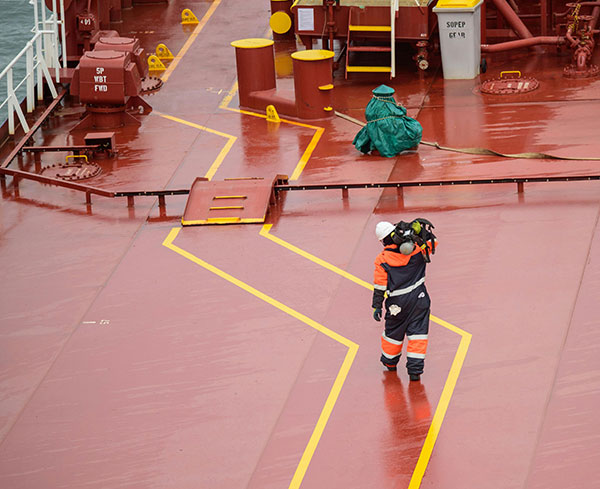
The core risks in maritime operations are still well known. Falls from height, lifting operations, engine room incidents and accidents in enclosed spaces continue to account for a significant share of serious injuries and fatalities. Enclosed spaces – such as ballast tanks and cargo holds – remain particularly hazardous despite decades of awareness of the risks.
Investigation reports repeatedly show similar patterns: procedures and checklists are often in place, but compliance is not always consistent. Time pressure, operational demands and human factors continue to influence how strictly safety procedures are followed in daily operations.
Crew fatigue as a safety-critical factor
In recent years, seafarer wellbeing and fatigue have become increasingly central topics in maritime safety discussions. International Maritime Organization (IMO) regulations and guidelines on work and rest hours have long addressed fatigue as a safety risk, and the topic remains highly relevant across the industry.
In practice, many vessels still operate with lean manning levels and demanding schedules. This increases the risk of human error, particularly during extended shifts or high-stress operational situations. Safety is therefore no longer defined solely by physical hazards, but also by cognitive workload, decision-making capacity and overall human performance under pressure.
Digitalisation and alarm overload
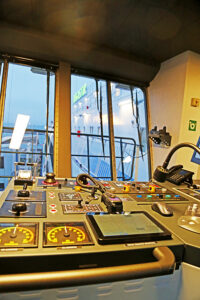
The growing complexity of shipboard systems has introduced a new operational challenge: alarm overload. Modern vessels can generate a very large number of alarms daily, many of which are routine or non-critical. This can lead to what is commonly referred to as alarm fatigue, where continuous alerts reduce the crew’s ability to prioritise and respond effectively to genuinely critical situations.
While automation and monitoring systems are designed to enhance safety, they also highlight the importance of human–machine interface design. Poorly prioritised or excessive alerts can, in the worst case, undermine situational awareness rather than improve it.
Alternative fuels change the risk landscape
The maritime energy transition is introducing new fuels such as methanol, ammonia and hydrogen. While these fuels are key enablers of decarbonisation, they also significantly alter onboard risk profiles.
Ammonia is toxic and requires strict handling procedures. Hydrogen is highly flammable and demands robust containment and ventilation solutions. Methanol is less complex to handle in some respects but still requires specific safety measures due to its toxicity and fire behaviour.
As a result, the transition is not only a technical challenge but also a major training and competency issue for crews, requiring updated procedures, new emergency preparedness practices and enhanced risk awareness.
Port automation and emerging interaction risks
In ports, automation is reshaping work environments. Cargo handling, yard logistics and loading operations are increasingly supported or managed by automated systems, remotely controlled cranes and autonomous vehicles.
While these developments improve efficiency and can reduce certain types of physical risk, they also introduce new safety challenges. The interaction between human-operated and automated systems requires clearly defined operating zones, reliable communication systems and robust situational awareness to prevent incidents in shared working environments.
Cybersecurity as part of operational safety
As maritime and port systems become more digitalised, cybersecurity is increasingly recognised as part of operational safety rather than a purely IT-related concern. Navigation systems, crane controls, terminal operating systems and positioning technologies are all critical components of safe operations.
Disruptions such as GNSS interference or cyber-related system failures can directly affect vessel movements, cargo handling and overall operational safety. For this reason, cybersecurity is now closely linked to risk management and safety assurance frameworks across the industry.
“Maritime occupational safety
is no longer primarily about
managing isolated risks.
Shipyards and the growing role of robotics
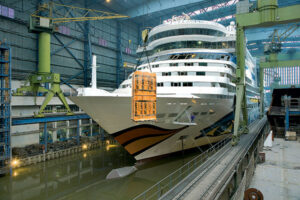
In shipbuilding and repair yards, automation and robotics are gradually taking on more physically demanding and hazardous tasks. Welding, heavy lifting and ergonomically challenging operations are increasingly supported by robotic systems and digital tools.
The objective is to improve safety by reducing human exposure to high-risk tasks, while also addressing labour shortages in the industry. At the same time, the role of workers is shifting from manual execution towards supervision, control and exception handling.
This transition requires new skills, particularly in operating and maintaining automated systems safely and effectively.
A shift towards system-level safety thinking
Maritime occupational safety is no longer primarily about managing isolated risks. Instead, it is increasingly understood as a system-level challenge where human factors, technology and operational processes interact continuously.
This shift places greater emphasis on integrated safety management, continuous training and organisational resilience. Safety performance depends not only on equipment or procedures, but also on how well complex systems function together in real operational conditions.
Despite rapid technological development, the fundamental principles of maritime safety remain unchanged: identifying risks, anticipating hazards and maintaining clear operational procedures. What is changing is the environment in which these principles must be applied.
As vessels, ports and shipyards become more automated and interconnected, safety increasingly depends on the ability to manage complexity – not just individual risks.
by: Editorial Team