Viking Line, the Port of Turku, and the Ports of Stockholm are carrying out a joint project aimed at establishing a fossil-free maritime corridor between Turku and Stockholm by 2035. Over the past two years, the project has achieved concrete progress in the use of biofuels, shore power, and the ports’ zero-emission targets.
Since the project began on 6 February 2024, the partners have built a strong foundation and deepened their collaboration, both in terms of technical solutions and joint planning. A clear roadmap has been developed for the project and is continuously updated, with the goal of making the maritime corridor fossil-free by 2035 at the latest.
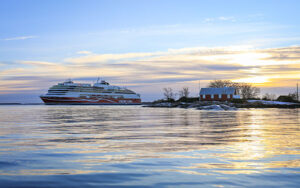
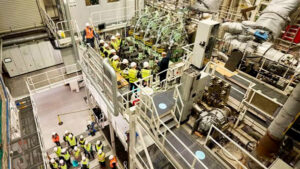
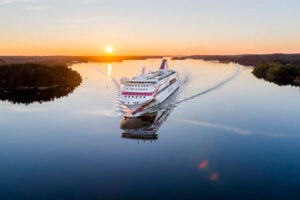
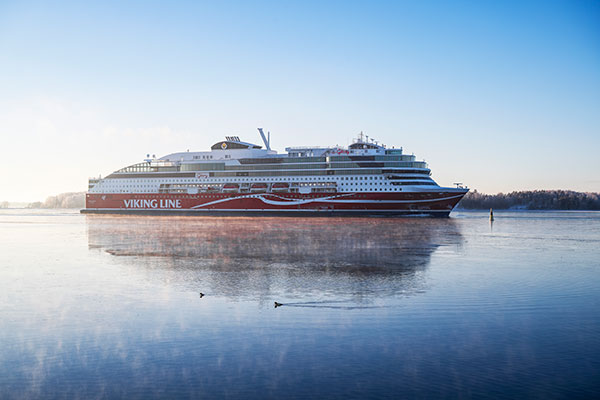
To mark the two-year milestone, the partners gathered aboard the Viking Glory, which operates between Turku and Stockholm. The event featured discussions on achieved results, lessons learned, remaining challenges, and future opportunities.
“Our collaboration on developing the Green Corridor clearly demonstrates how Viking Line is advancing the transition toward emission-free shipping. In just two years, we have made significant progress, particularly thanks to our investments in renewable biogas. The work going forward will continue to require strong commitment and close cooperation between shipping companies and ports, as well as the involvement of politicians, decision-makers, authorities, and industry players,” says Marcus Risberg, CEO of Viking Line.
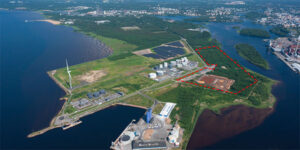
“We are proud of the tangible progress achieved during the first two years of the Green Corridor project at the Port of Turku. The shore power research and planning work has advanced to the point where we are prepared for upcoming solutions through the pipelines constructed as part of the Ferry Terminal Turku project. Another major step is Finland’s first public heavy-duty electric charging station at our truck park, offering four fast-charging points for the transport sector,” says Erik Söderholm, CEO of the Port of Turku.
“The City of Stockholm has ambitious climate targets, and maritime transport plays a crucial role in the transition to fossil-free logistics. It is the ports’ responsibility to ensure that fossil-free alternatives are genuinely available – and in this respect, the Green Maritime Corridor project is a true pioneer. I hope that our long-term strategic work to develop port electricity supply and infrastructure will encourage the entire maritime sector to embrace change,” says Deniz Butros, City Commissioner for Housing of Stockholm, who also oversees the city’s ports.
Project Focus Areas
During the first two years, the partners have identified and prioritized the key goals and measures to reduce carbon emissions from maritime transport. Work is guided by a joint project plan that is continuously updated. Key focus areas include:
Viking Line
- Preliminary studies for battery installations on Viking Grace and Viking Glory
- Installation of Elogrid networks* on ship hulls
- Increasing the use of renewable biogas tenfold by 2025 (compared to 2024)
- Ensuring a high biogas share (50% in the first half of 2026)
- Increasing sales of fossil-free voyages on all ships
Port of Turku
- Research and pilot projects for shore power connections at the quay
- Zero-emission operations from Viking Line vessels at the quay – required shore power infrastructure
- Zero-emission port services for all vehicles, including charging infrastructure
- Access for shipping companies to refuel with sustainable fuels, Gasum biogas
Ports of Stockholm
- Goal of zero emissions from Viking Line vessels at the quay
- Collaboration with external actors to ensure sustainable transport to and from the port
- Access to refuel with fossil-free fuels
*Elogrid is a net-like structure installed on the hull that reduces water resistance and improves fuel efficiency by optimizing water flow and minimizing turbulence.
Translated by Editorial Team.