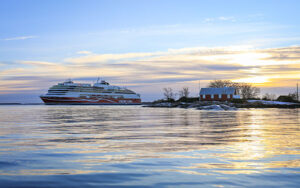
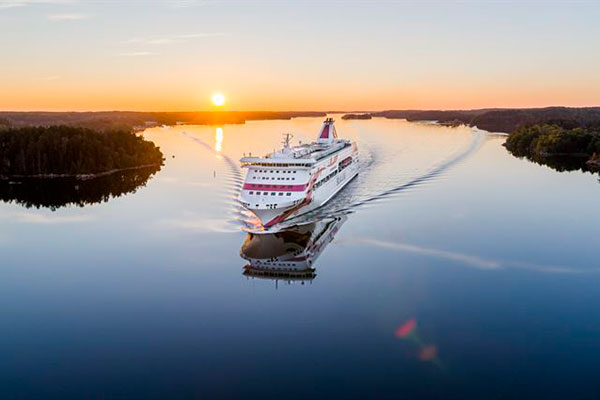
Tallink Grupp is continuing its long-term cooperation with the John Nurminen Foundation to improve and protect the condition of the Baltic Sea. The well-known Finnish environmental organization has set a strategic goal of reducing human-induced pressure on the Baltic Sea. Tallink Grupp supports the foundation’s work with a €20,000 donation, generated from the sales of Tallink Silja Line chocolate bars.
“We operate in a magnificent but very sensitive Baltic Sea region. In addition to our cooperation with the John Nurminen Foundation, we are investing heavily in energy efficiency and environmentally friendly solutions. Fast ferries on the Helsinki–Tallinn route already use a significant share of renewable fuel, liquefied biomethane. We continuously improve the energy efficiency of our fleet, reducing both our own and our customers’ environmental footprint. We act in a determined and systematic manner,” says Paavo Nõgene, CEO of Tallink Grupp.
The cooperation between Tallink Grupp and the John Nurminen Foundation is based on a shared goal: reducing the burden on the Baltic Sea and supporting the restoration of marine nature. Tallink’s contribution is linked to the sales of Tallink Silja Line chocolate bars. For every product sold, €0.20 is donated to support the foundation’s important work. This also enables passengers to easily participate in protecting the Baltic Sea. Similar cooperation has been carried out in previous years.
The John Nurminen Foundation focuses on projects that reduce eutrophication in the Baltic Sea, prevent harmful substances from entering the sea, and promote the recovery of marine ecosystems. The foundation’s projects are based on scientific research and deliver measurable results for the benefit of the entire Baltic Sea region.
“We fund our Baltic Sea work through donations, and I would like to thank Tallink Grupp for its long-standing cooperation and support. Thanks to these donations, we have been able to significantly reduce harmful chemical discharges into the Baltic Sea in Finland and carry out marine restoration work, for example along the southern coast of Sweden. An important part of our work is also strengthening people’s relationship with the sea. Our main annual event, Baltic Sea Day, will once again be celebrated in August across the region,” says Annamari Arrakoski-Engardt, CEO of the John Nurminen Foundation.
The cooperation between Tallink Grupp and the John Nurminen Foundation spans more than two decades; joint Baltic Sea protection projects have been carried out since 2003.
Translated by the Editorial Team.
Source: AS Tallink Grupp